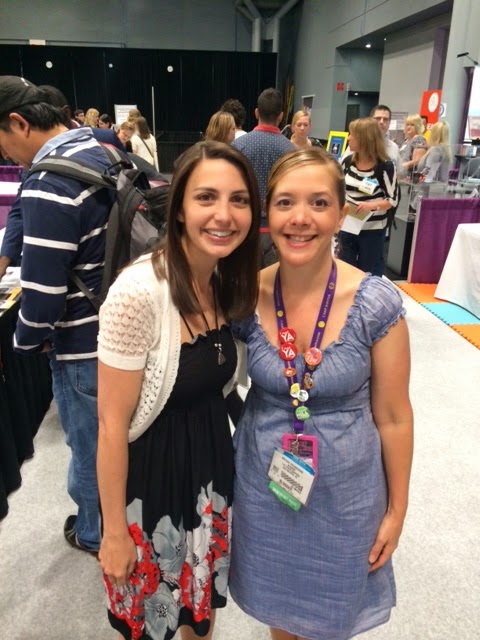
Today, I'm happy to welcome my publishing house sister, Stephanie Wardrop. She's the author of Snark and Circumstance, which released February 5, 2013 through Swoon Romance. Stephanie and I found ourselves in the same position of having to take a novel and break it up into a series of novellas. Stephanie's here today to tell you about her experience.
Hi, everybody!
I’m Stephanie Wardrop, author of Snark
and Circumstance, checking in with my Swoon Romance serial sister Kelly
Hashway about the subject of serialized
e-novellas.
Like Kelly, I never set out to write an e-novella series. I
did not, in fact, know such a thing existed. Because I am a
I mean, I wasn’t even thinking about e-books at the
time. When I was writing Snark and Circumstance, I was thinking about
NOVELS. I was thinking Snark would come out looking something like this
something you would open up and
then close and it would sit all nice and neaton a shelf somewhere, waiting patiently
for you to open it again.
So when an editor at  Swoon Romance called to say she was interested
in the book but wanted to publish it as a series of e-books, I was like this
Swoon Romance called to say she was interested
in the book but wanted to publish it as a series of e-books, I was like this
But then I thought about Jane Austen, whose Pride and Prejudice inspired Snark, and whose books, like most
nineteenth-century novels, came out as TRIPLE
DECKERS : one novel was divided into three books coming out months apart
and each ending on a cliffhanger so that every reader would be counting down
the days until they could buy the next installment. And I thought
Now all I had to do was figure out how to cut the thing into
four pieces, all equally engaging and action-packed and hilarious.
Right.
There are some definite advantages to serializing. For one,
you get not ONE cover reveal, but FOUR! I wish I could show you my second
cover, because it is, as my publisher says, SASSY, but publishers
guard unreleased covers the way Coca Cola guards its formula, the way
Colonel Sanders guards his eleven secret
herbs and spices, so I can’t.
On the other hand, four
covers means four titles. It took me three years to come up with the title
of Snark and Circumstance, so to hear
I had about forty-eight hours to come up with three more set me into a state of
paralytic frenzy. (Trust me – this
term sounds oxymoronic and impossible, but I bet any writer who’s faced a
deadline knows what I mean). I could fill the New York Public Library with all
of my rejected titles, but I eventually came up with three more that didn’t
totally suck!
But for me, the biggest challenge has been that four separate texts means four not-so-separate
but individually complete narrative arcs. Because each story has to simultaneously – and
paradoxically, perhaps –
*further the plot and
characterization from the previous installment
*be able to stand on its own as a
separate self-contained text
*not bore anyone so much that they
don’t want to read the next one!
How do you manage all of those things at once? How do you catch new readers up to
speed about who the characters are and what they want and how they feel about
each other (and where they live and what they look like and how old they are)
without boring the readers who were with you in the first installment(s)? How
do you balance exposition (the
background for the current installment) without falling into an information dump?
It ain’t easy. But no writer worth reading shrinks from
challenges, right?
Most of us remember this from ninth grade, the dreaded PLOT DIAGRAM:
If you recall, this is the
arc of the whole novel, so in a regular novel, all the really exciting climactic
stuff would be happening in the middle (well, in actuality, it’s much more
likely to happen three quarters of the way through, if not even further in.
Think about it. You’re not going to read another hundred pages AFTER the epic
battle, after Harry Potter finally defeats the forces of darkness or Romeo and
Juliet are both found dead. That would be like sitting in the movie theater so
you could watch the kids in their uniforms sweep up your popcorn tubs and throw
your discarded drink cups into garbage bags. Pointless.). At any rate, following
this standard narrative arc in a series would mean that the middle two books
would be nonstop action and the last one would be horrendously dull. But again,
that’s not quite true despite what this little graph above says. In actuality
the middle books of a series, if they followed this proscribed arc of a novel,
would be kind of tedious. The main character would get themselves into all
sorts of trouble, dig themselves in deeper and deeper, and there would be no
relief for them at all until they got to Book Four. Which wouldn’t work.
Even if you HATED the main character, you wouldn’t enjoy the experience,
essentially, of seeing them flogged for
two whole books – and you wouldn’t pay to see that happen (or to read it
happening).
So the trick, for me, is to work with LITTLE VICTORIES
in Books Two or Three.

I’m learning that I have to get my main character into all
sorts of smallish troubles -- misunderstandings, arguments, humiliations that
don’t feel smallish at all to her – and get her out of them in each
installment. (And in Books Two and Three my main character, Georgia, gets into
some trouble involving charming
drunks, sightings in the family planning section of CVS, and scarlet letters.) But
she cannot resolve the BIG TROUBLE that has gotten her into all of the smallish
troubles in the first place until the end, Book Four. Such big troubles for
main characters are often defined by fancy ninth-grade literary terms like
HUBRIS, meaning excessive pride.
Or they may suffer an inability to a have sense of humor about oneself
or a major lack of confidence that prevents them from emerging as the superhero
they need to be until the last volume of the series.
So in Book Two I might resolve one or two smallish troubles.
I may end it with two sisters no longer
fighting like dogs or
But the sisters won’t come to appreciate
each other for who they truly are yet.
Not until Book Four:
Halfway through the serialization process for Snark, this is what I have learned so
far, through the process of writing and revising.
But I have also learned, as you can see in this post, that there is nothing NOTHING that cannot be best
illustrated on the web by pictures of kittens.